8440 E McDonald Dr, Suite A, Scottsdale, AZ 85250
 scottsdalesdentist@gmail.com

Gum disease can feel scary, but you do have control over early-stage symptoms and daily prevention. In this article you’ll learn practical, safe home treatments and habits that support professional care, and when to call a dentist so you avoid permanent damage.
I’ll share easy steps, tools that really help, and realistic timelines so you know what to expect. If you notice bleeding, persistent bad breath, or receding gums, start these actions today and talk to your dentist about next steps. how to treat gum disease at home is about daily habit changes, smart home care, and partnering with your dental team.
Why home care matters
Gum disease starts when bacterial plaque accumulates along the gum line, causing inflammation. Left unchecked, early gingivitis can progress to periodontitis, which damages bone and supporting tooth structures. Good home care reduces plaque daily and slows or reverses early disease, while regular professional cleanings remove hardened tartar that you cannot remove at home. For authoritative overviews, see the CDC and Mayo Clinic. (CDC gum disease overview, Mayo Clinic periodontitis care).
Core at-home steps that work
1. Brush well, twice a day
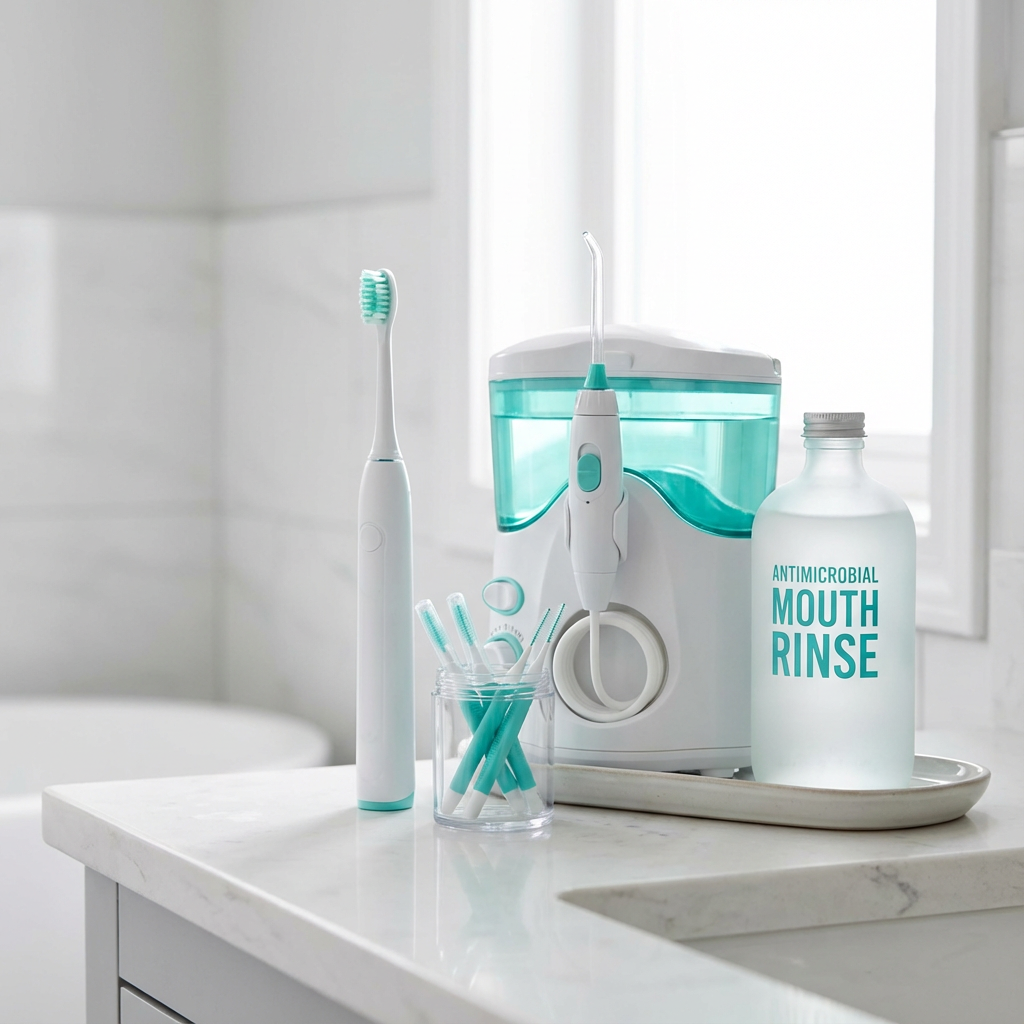
- Use a soft-bristled or electric toothbrush, twice daily for two minutes. An electric toothbrush often removes plaque more effectively. Replace the brush every three months.
- Angle the brush at 45 degrees to the gum line and use gentle strokes along the tooth and gum margin.
2. Clean between teeth daily
- Floss at least once a day, or use interdental brushes or a water flosser if you have tight spaces or find flossing difficult. These tools remove plaque where a toothbrush can’t reach. The NIH and dental associations recommend daily interdental cleaning.
3. Use a dentist-recommended mouth rinse
- An antimicrobial mouth rinse can reduce bacteria and plaque buildup. Ask your dentist which rinses are best for short term use if you have active inflammation.
4. Improve technique, not just frequency
- Slow, careful brushing and complete interdental cleaning beat rushed scrubbing. Ask your hygienist for a quick demonstration during your next visit or schedule an appointment at Scottsdales Dentist for personalized guidance: https://scottsdalesdentist.com/dental-cleanings-exams/.
5. Control risk factors
- Stop smoking, manage diabetes, reduce sugar intake, and maintain good overall health. These factors influence gum disease risk and healing.
Home remedies and supportive practices — what helps, and what to avoid
- Saltwater rinses: A gentle warm salt rinse can reduce discomfort and temporarily lower bacteria. Use 1/2 to 1 teaspoon salt in 8 ounces of warm water, swish for 30 seconds, then spit.
- Oil pulling: Some people find oil pulling with coconut oil helps breath and plaque, but evidence is limited. Use this only as an adjunct, not a replacement for brushing and flossing.
- Over-the-counter pain relief: Use as directed for soreness, but avoid delaying a dental visit if pain is severe or persistent.
- Avoid aggressive home scraping or DIY scale removal. Hard tartar removal requires professional instruments and training, and attempts to remove tartar at home can damage gums and teeth.
For balanced guidance on prevention and home care see the American Academy of Periodontology and ADA resources. (AAP prevention, ADA periodontitis overview).
When home care is enough, and when it is not
- Gingivitis, characterized by red, swollen, or bleeding gums that respond to better brushing and flossing, may be reversible with home care and professional cleanings.
- If you have persistent pockets, loose teeth, bone loss, or symptoms that don’t improve in 2 to 4 weeks despite good home care, you likely need professional periodontal therapy such as scaling and root planing or specialist care. The ADA and Mayo Clinic outline these treatment pathways.
Tools and products we recommend
- Electric toothbrush with pressure sensor, soft brush heads.
- Interdental brushes sized to your gaps, or a water flosser for braces or limited dexterity.
- Alcohol-free antimicrobial mouth rinse if recommended by your dentist.
- Soft-tip gum brush or gum stimulator for massage if you have sensitive recession areas.
Ask our team which brands carry the ADA Seal of Acceptance when you schedule a cleaning at Scottsdales Dentist: https://scottsdalesdentist.com/dental-cleanings-exams/.
Practical 14-day plan to calm early gingivitis
- Day 1, examine and record symptoms: bleeding, swelling, bad breath.
- Days 1–14, brush twice daily with an electric toothbrush and floss or use interdental brushes once daily.
- Add a dentist-recommended mouth rinse for up to two weeks if inflammation is present.
- Avoid tobacco, reduce sugar, and increase water intake.
- Book a professional cleaning within two weeks, especially if bleeding persists.
If you follow this plan and symptoms improve, maintain the routine. If they do not improve, call for a periodontal assessment.
FAQs
How quickly will my gums heal with home treatment?
Mild gingivitis can improve within 7 to 14 days with consistent, proper brushing, daily interdental cleaning, and a professional cleaning. If you have periodontitis, healing is slower and typically needs professional intervention.
Can I reverse receding gums at home?
Recession cannot be reversed at home, though you can stop further recession by controlling plaque and avoiding trauma. In some cases gum grafting by a periodontist restores lost tissue.
Are natural remedies like oil pulling enough to treat gum disease?
Natural remedies may offer modest benefits, but they are not substitutes for proven oral hygiene, professional cleanings, and dental treatment when needed.
When should I see a dentist for gum disease?
See a dentist if you have bleeding when brushing, persistent bad breath, loose teeth, or if symptoms continue after two weeks of improved home care. For immediate concerns, Scottsdales Dentist offers same-day support: https://scottsdalesdentist.com/emergency-dental-care/.
Can my general dentist treat advanced gum disease?
Your general dentist can manage many cases and refer you to a periodontist for advanced surgical or regenerative therapy. Learn about periodontal therapy options here: https://scottsdalesdentist.com/periodontal-treatment/.
Will improving gum health protect my overall health?
Good gum health is linked to lower systemic inflammation and may reduce risks associated with diabetes and heart disease. Maintaining oral health is an important part of overall wellness.
Ready to protect your gums and smile?
If you’re in Scottsdale and want a personalized check, Dr. Jennifer Bundy and our team provide expert, gentle care for gum disease prevention and treatment. Call (480) 948-1720 or contact us online to schedule your exam and cleaning today. We offer preventive cleanings, periodontal therapy, and restorative options like dental implants and crowns: https://scottsdalesdentist.com/dental-implants/.
Summary
At-home care, done correctly, prevents and can reverse early gum disease. Brush with good technique, clean between teeth daily, use dentist-recommended rinses, control risk factors, and see a dentist promptly when symptoms persist. Scottsdales Dentist in Scottsdale offers professional cleanings, periodontal therapy, and emergency care to keep your smile healthy: https://scottsdalesdentist.com/.
Conclusion
Here’s the thing, improving gum health is both daily habit and professional partnership. Start simple, be consistent, and get expert guidance when needed. Dr. Jennifer Bundy and the team at Scottsdales Dentist focus on comfort, modern care, and real results for Scottsdale families. For same-day needs or personalized plans, call (480) 948-1720 or contact us online.
About Scottsdales Dentist
Scottsdales Dentist is a trusted, top-rated dental practice located in the heart of Scottsdale, Arizona (85250). Led by Dr. Jennifer Bundy, DDS — recognized as a Top Arizona General Dentist for 2025 — our office provides complete family and cosmetic dental care with a focus on comfort, technology, and long-term oral health.
We combine personalized, gentle care with the latest advancements in cosmetic dentistry, preventive cleanings, and dental implants to help patients achieve healthy, confident smiles. Whether you need same-day emergency dental care or advanced smile restoration, our experienced team delivers exceptional results in a calm, friendly setting.
Our Top Services Include:
- Dental Exams & Cleanings
- Teeth Whitening
- Porcelain Veneers & Lumineers
- Dental Implants
- Dental Crowns & Bridges
- Dentures
- Night Guards
- Gum Disease Treatment
Ready to Schedule an Appointment?
We’re accepting new patients! Call (480) 948-1720 or contact us online to schedule your next visit at Scottsdales Dentist.