8440 E McDonald Dr, Suite A, Scottsdale, AZ 85250
 scottsdalesdentist@gmail.com


How to Treat Gum Disease Scottsdale Residents Can Manage Safely
Bleeding while brushing can feel easy to dismiss, especially when life is busy. But persistent bleeding, tenderness, swelling, bad breath, or gums that seem to be pulling away from teeth deserve professional attention. For people asking how to treat gum disease Scottsdale residents can address with confidence, the right answer begins with an accurate dental examination and a treatment plan based on the stage of disease.
Gum disease ranges from early gingivitis to periodontitis, a more advanced condition that can affect the bone supporting your teeth. The good news is that gingivitis is often reversible, and periodontitis can usually be controlled with consistent professional care and careful home habits. At Scottsdales Dentist, Dr. Jennifer Bundy, recognized as a Top Arizona General Dentist for 2025, takes a clear, patient-centered approach to explaining what is happening and what comes next.
Start With a Periodontal Evaluation
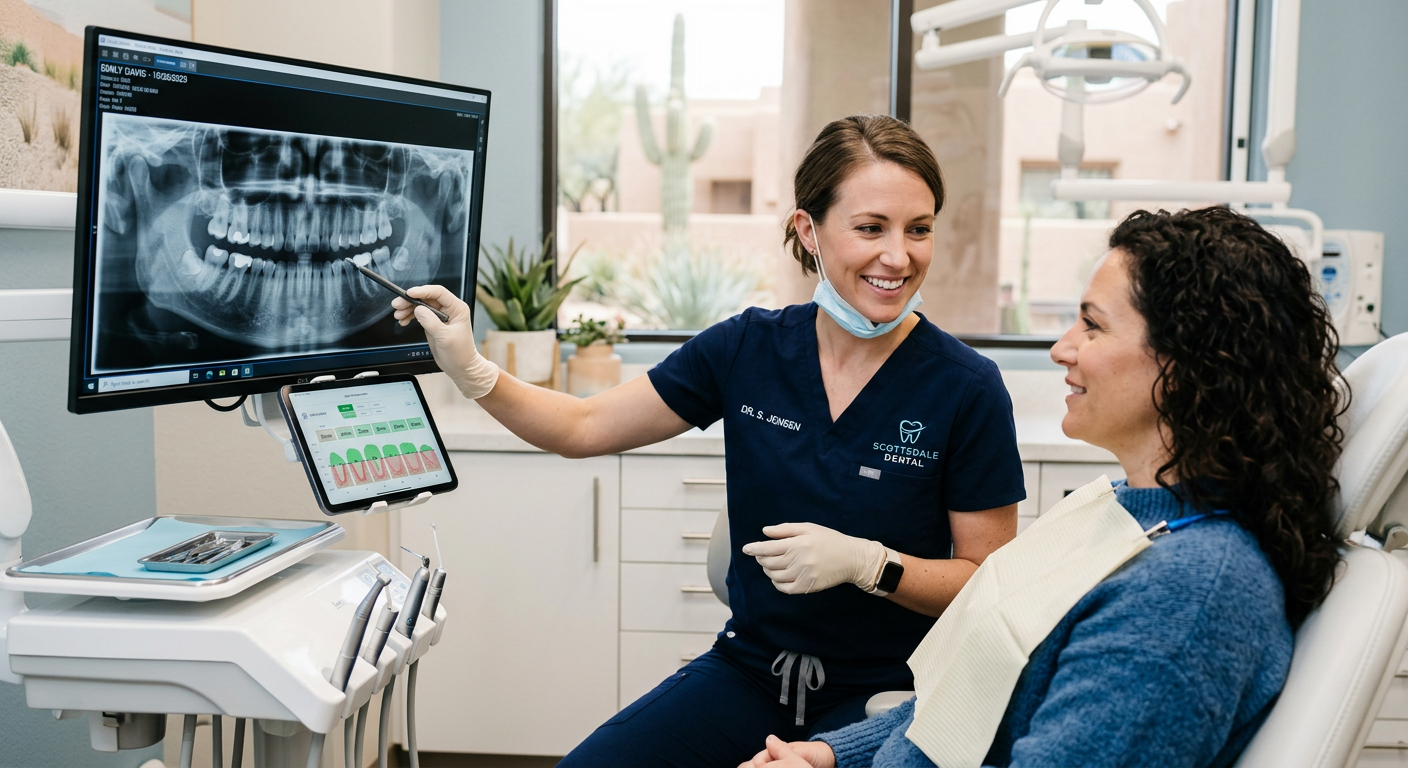
The first step is determining whether symptoms come from early gum inflammation or established periodontal disease. We evaluate your gums, measure periodontal pockets, review X-rays when appropriate, and discuss health factors that can affect healing, including diabetes, medications, tobacco use, and teeth grinding.
The Centers for Disease Control and Prevention reports that about 4 in 10 U.S. adults age 30 and older had periodontitis. That makes early evaluation especially important, because gum disease may progress quietly before it causes significant discomfort. CDC oral health guidance explains that periodontitis cannot be reversed, but it can be slowed and managed with professional treatment.
For many Scottsdale families, professionals, and retirees, an exam is also the moment they learn that a routine cleaning and a periodontal cleaning serve different purposes. Our dental cleanings and exams help us identify changes early, when treatment is usually simpler.
Gingivitis and Periodontitis Need Different Care
Early gum disease can often improve with professional cleaning and stronger daily plaque removal. More advanced disease usually requires deeper treatment below the gumline, followed by periodontal maintenance to help keep infection under control.
| Stage | Common Signs | Typical Care | Main Goal |
|---|---|---|---|
| Gingivitis | Bleeding, redness, mild swelling | Professional cleaning and improved home care | Reverse inflammation |
| Mild to moderate periodontitis | Deeper pockets, recession, bad breath | Scaling and root planing | Reduce bacteria below gums |
| Advanced periodontitis | Bone loss, loose teeth, painful chewing | Advanced periodontal care or referral | Preserve teeth and support |
Treating Early Gingivitis
If plaque has irritated the gums but has not caused bone loss, we may recommend a professional cleaning along with a more intentional routine at home. Brushing twice daily with a soft-bristled toothbrush, cleaning between teeth every day, and returning for recommended preventive visits can allow inflamed gums to heal.
Do not try to scrub bleeding gums harder. Gentle, thorough cleaning is more effective than aggressive brushing, which can further irritate delicate gum tissue.
Treating Periodontitis With Deep Cleaning
When tartar and bacteria collect below the gumline, regular brushing cannot remove them. Scaling and root planing, often called deep cleaning, removes plaque and hardened tartar from below the gums and smooths root surfaces so the gums can heal more effectively.
The American Dental Association describes scaling and root planing as a deep cleaning below the gumline for gum disease. It may take more than one visit, and local anesthetic may be used to keep you comfortable. Learn more from the American Dental Association's explanation of scaling and root planing.
At our periodontal treatment office, we personalize care around your pocket measurements, overall health, comfort preferences, and response to treatment. A deep cleaning is not a substitute for daily home care, but it can be an important reset when disease has moved beneath the gumline.
What Healing Looks Like After Gum Treatment
Healing is usually gradual, not instant. You may notice temporary tenderness, mild bleeding, or sensitivity after deep cleaning, especially around areas that had significant buildup or inflammation.
We typically schedule follow-up visits to reassess gum health, review pocket measurements, and refine your home-care routine. Depending on your condition, periodontal maintenance may be recommended more often than a standard six-month cleaning schedule. This ongoing care matters because gum disease is manageable, but it can return if bacterial plaque builds up again.
Daily Habits That Help Protect Your Gums
Professional treatment works best when it is supported by consistent habits at home. These practical steps can make a meaningful difference:
- Brush twice a day for two minutes using a soft toothbrush and fluoride toothpaste.
- Clean between every tooth daily with floss, interdental brushes, or another device we recommend.
- Aim the toothbrush gently toward the gumline rather than brushing only the visible tooth surfaces.
- Replace your toothbrush or brush head when bristles become worn.
- Avoid tobacco, which can increase gum disease risk and interfere with healing.
- Keep diabetes and other chronic health conditions well managed with your medical team.
- Keep recommended periodontal maintenance appointments, even when your gums feel better.
When Gum Disease Needs More Advanced Treatment
Some patients need care beyond deep cleaning, particularly when gum pockets remain deep, bone loss has occurred, or teeth have become loose. In these cases, treatment can include localized medication, periodontal surgery, grafting procedures, or coordinated care with a periodontal specialist.
No two cases are identical. We focus on preserving healthy natural teeth whenever possible, while also discussing restorative options such as dental implants if tooth loss has already occurred. Clear conversations about benefits, limits, timing, and long-term maintenance help patients make informed decisions without pressure.
Do Not Wait on Painful Gum Symptoms
Gum disease does not always hurt, but an abscess, severe swelling, uncontrolled bleeding, facial swelling, or a loose tooth can require urgent attention. If you have severe pain or signs of infection, review our information on emergency dental care near Old Town and contact a dental professional promptly.
Why Local, Consistent Care Matters in Scottsdale
Treating gum disease is not a one-visit event. The most successful plans combine accurate diagnosis, professional treatment, maintenance appointments, and home care that fits your routine.
As a Park Scottsdale dentist serving the 85250 community, we know that patients want straightforward answers and a comfortable environment. Dr. Bundy and our team explain each recommendation in plain language, from early gingivitis care to complex periodontal therapy. We also coordinate preventive, restorative, and cosmetic dental needs so your treatment supports both oral health and confidence in your smile.
Get Clear Answers About Your Gum Health
If your gums bleed, feel sore, or have started to recede, a professional evaluation can clarify what is causing the problem and what treatment is appropriate. At Scottsdales Dentist, we provide calm, personalized care for patients seeking a best family dentist Scottsdale practice that can support long-term oral health.
Call (480) 948-1720 or contact us online to schedule your appointment today. We will help you understand your gum condition, treatment options, and the practical next steps for protecting your smile.
Frequently Asked Questions
Can gum disease go away on its own?
Early gingivitis usually does not resolve fully without improving plaque removal and receiving a professional cleaning. Periodontitis requires professional treatment because tartar and bacteria below the gumline cannot be removed with brushing alone.
Is bleeding when I floss always a sign of gum disease?
Bleeding can be a sign of gum inflammation, especially if it happens repeatedly. If you have recently started flossing again, minor bleeding may improve as inflammation settles, but bleeding that continues for more than a week or two should be evaluated.
Is a deep cleaning painful?
Deep cleaning is usually manageable, and local anesthetic can be used to keep treatment comfortable. Mild soreness or temperature sensitivity afterward is common and generally improves within several days.
How much does gum disease treatment cost in Scottsdale?
Cost depends on the stage of disease, the number of areas needing treatment, necessary imaging, and whether advanced periodontal procedures are recommended. An exam is the best way to receive an accurate estimate and discuss available financial options.
Can I use mouthwash instead of flossing?
No. Antibacterial mouthwash may be helpful for some patients, but it does not physically remove plaque between teeth or below the gumline. Daily flossing or an appropriate interdental cleaner remains important.
Can teeth loosened by gum disease be saved?
Sometimes, yes. The outlook depends on the amount of bone loss, tooth mobility, bite forces, infection control, and how well the condition responds to treatment. Prompt evaluation gives us the best opportunity to stabilize affected teeth.
Summary
Gingivitis can often be reversed with professional cleaning and consistent home care, while periodontitis requires ongoing management to protect the bone and tissues supporting your teeth. The most effective path includes an exam, appropriately matched treatment, and regular follow-up visits.
If you are concerned about bleeding gums, bad breath, swelling, recession, or a loose tooth, do not rely on home remedies alone. Timely periodontal care can protect comfort, function, and your natural smile for years to come.
Take the Next Step Toward Healthier Gums
You do not have to guess whether your symptoms are minor or a sign of progressive gum disease. Schedule a visit with Scottsdales Dentist for a thorough evaluation and a treatment plan designed around your needs and comfort.
Call (480) 948-1720 or contact us online to schedule your appointment today. We are here to provide respectful answers, gentle care, and dependable support for your healthiest smile.
About Scottsdales Dentist
Scottsdales Dentist is a trusted, top-rated dental practice located in the heart of Scottsdale, Arizona (85250). Led by Dr. Jennifer Bundy, DDS — recognized as a Top Arizona General Dentist for 2025 — our office provides complete family and cosmetic dental care with a focus on comfort, technology, and long-term oral health.
We combine personalized, gentle care with the latest advancements in cosmetic dentistry, preventive cleanings, and dental implants to help patients achieve healthy, confident smiles. Whether you need same-day emergency dental care or advanced smile restoration, our experienced team delivers exceptional results in a calm, friendly setting.
Our Top Services Include:
- Dental Exams & Cleanings
- Teeth Whitening
- Porcelain Veneers & Lumineers
- Dental Implants
- Dental Crowns & Bridges
- Dentures
- Night Guards
- Gum Disease Treatment
Ready to Schedule an Appointment?
We’re accepting new patients! Call (480) 948-1720 or contact us online to schedule your next visit at Scottsdales Dentist.