8440 E McDonald Dr, Suite A, Scottsdale, AZ 85250
 scottsdalesdentist@gmail.com


What Are Lumineers vs. Veneers? Scottsdale Smile Choices for Adults
A brighter, more balanced smile can be created in more than one way, and the choice should never come down to a marketing promise alone. What are Lumineers vs. veneers? Both are thin cosmetic coverings bonded to the front of teeth, but they differ in thickness, preparation requirements, and how much control they give us over the final result.
For many Scottsdale adults, the decision comes down to an important question: do you want a subtle enhancement with minimal changes to tooth enamel, or do you need a more customized solution for discoloration, chips, gaps, or uneven tooth shape? We help patients make that decision with a close look at their smile, bite, gum health, and long-term goals.
Lumineers vs. Veneers at a Glance
Lumineers are a branded form of ultra-thin porcelain veneer, while traditional porcelain veneers are custom ceramic shells that usually require more detailed tooth preparation. Neither option is automatically better. The right fit depends on what your teeth need to look natural, feel comfortable, and stay healthy.
| Feature | Traditional Porcelain Veneers | Lumineers | Composite Bonding |
|---|---|---|---|
| Material | Custom dental ceramic | Ultra-thin branded porcelain | Tooth-colored resin |
| Tooth preparation | Often a small amount | Minimal in select cases | Usually very limited |
| Best for | Bigger smile changes | Modest cosmetic changes | Small chips or gaps |
| Color masking | Strong | More limited on dark teeth | Moderate |
| Longevity | Long-term with care | Long-term with care | Often needs touch-ups |
What Are Traditional Porcelain Veneers?
Traditional veneers are thin, custom-made shells that cover the visible front surfaces of teeth. They can improve the appearance of stubborn stains, worn edges, minor spacing, chips, uneven sizes, and mild cosmetic alignment concerns.
Because a veneer is custom designed, we can adjust its shade, shape, translucency, and proportion to complement the rest of your smile. In many cases, a small amount of enamel is carefully shaped to make room for the ceramic. This helps the veneer sit naturally instead of making a tooth look too thick or prominent.
The American Dental Association explains that veneers can improve chipped, stained, crooked, or misshapen teeth, but it also emphasizes that conventional veneer treatment is not reversible when enamel is removed. Read the ADA’s patient information on dental veneers before making a decision.
When Veneers Often Make More Sense
Traditional porcelain veneers may be the stronger choice when you want to correct several concerns at once. They can be especially helpful for teeth with deep discoloration that may not respond well to whitening, uneven edges from wear, visible chips, or shapes that need a more substantial change.
They also give the dentist and dental laboratory more room to create lifelike contours and natural light reflection. That flexibility matters when the goal is a polished smile that still looks like you, rather than a flat or overly uniform result.
What Are Lumineers?
Lumineers are a specific brand of very thin porcelain laminates. They are often promoted as a minimal-prep option because carefully selected patients may need little or no enamel reduction before the restoration is bonded.
That conservative approach can be appealing if your teeth are already well positioned and you are looking for a smaller change in color, shape, or spacing. For example, Lumineers may be considered for a patient with healthy, straight teeth who wants to soften a small gap or improve mild staining without a dramatic redesign.
Why Thinner Is Not Always Better
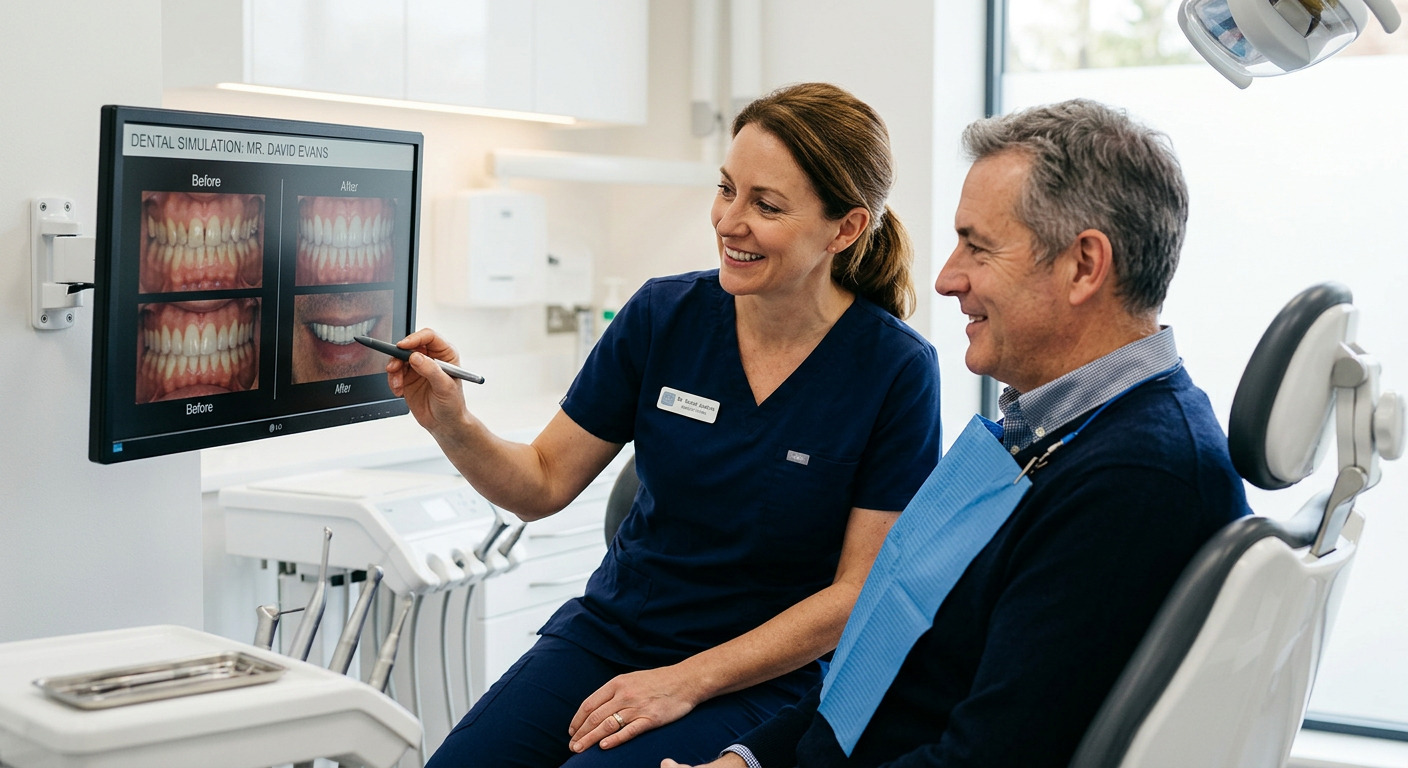
An ultra-thin restoration needs the right foundation. If teeth are already prominent, significantly darkened, crowded, or rotated, placing a thin shell directly over them can create unwanted bulk or may not mask the underlying color as effectively.
This is why a no-prep approach is not a shortcut for every smile. We evaluate your profile, bite, gumline, tooth position, and facial proportions before recommending any cosmetic treatment. A natural result should look balanced from the side as well as from the front.
The Most Important Difference Is Treatment Planning
The most meaningful distinction between Lumineers and veneers is not simply how much enamel is removed. It is whether the proposed treatment fits your teeth, your bite, and the kind of change you want to see every day.
A good planning appointment begins with healthy teeth and gums. Cavities, gum inflammation, untreated grinding, loose teeth, or a painful bite need attention before cosmetic work. For patients considering a smile enhancement, our dental cleanings and exams help us identify concerns early, and periodontal treatment may be appropriate when gum health needs to be stabilized first.
At Scottsdales Dentist, Dr. Jennifer Bundy, recognized as a Top Arizona General Dentist 2025, takes time to explain what each option can realistically accomplish. That personalized approach is especially valuable for families, professionals, and retirees looking for a Park Scottsdale dentist who prioritizes comfort as well as cosmetic detail.
Your Bite Can Affect the Life of Your Smile
Clenching, grinding, and deep bite patterns can place significant pressure on front teeth and cosmetic restorations. If we see signs of wear or strain, we may recommend a protective appliance after treatment to help preserve the result.
Long-term results also depend on everyday care. The ADA reports that a systematic review found an overall 89 percent survival rate for feldspathic porcelain and glass-ceramic laminate veneers after an average of nine years. Chipping was the most frequently reported complication, which is why brushing, flossing, routine visits, and avoiding habits like nail biting or chewing ice matter. Read the ADA’s discussion of restorative material longevity for more context.
How We Help Scottsdale Patients Choose
The best choice begins with an honest conversation about your goals. We ask what you would like to change, how dramatic you want the result to be, whether you grind your teeth, and what level of tooth preparation feels comfortable to you.
Lumineers May Be a Better Fit If You Want
- A modest improvement in color, shape, or small spaces
- A conservative option for teeth that are already well aligned
- Minimal tooth preparation when clinically appropriate
- A subtle enhancement rather than a major smile redesign
Traditional Veneers May Be a Better Fit If You Need
- More reliable masking of dark stains or discoloration
- More significant changes to tooth shape, length, or proportion
- Correction for chips, wear, mild rotations, or uneven edges
- Greater artistic control over translucency and contour
Sometimes, neither Lumineers nor veneers are the first recommendation. Professional whitening may be enough for surface staining, bonding can repair a small chip, and orthodontic treatment may be better for meaningful tooth movement. A thoughtful cosmetic dentist Scottsdale AZ patients trust will explain these alternatives clearly instead of pushing a single treatment.
Ready to Discuss Your Smile Options?
A consultation is the best way to determine if veneers, Lumineers, whitening, bonding, or another option fits your needs. We provide personalized cosmetic dentistry Scottsdale patients can feel confident about, with clear explanations and a calm, comfortable experience.
Call (480) 948-1720 or contact us online to schedule your appointment today. You can also learn more about our approach to cosmetic dental care before your visit.
Frequently Asked Questions
Are Lumineers cheaper than traditional veneers?
Not always. The cost depends on the number of teeth treated, materials, laboratory work, case complexity, and whether other dental care is needed first. We provide a personalized estimate after evaluating your smile and discussing your goals.
Can Lumineers make teeth look bulky?
They can if an ultra-thin layer is added to teeth that already project forward or need more color masking. Careful evaluation and mock-up planning help us determine whether a minimal-prep option will look naturally proportioned.
How long does it take to get veneers or Lumineers?
Most porcelain veneer and Lumineer cases involve planning, impressions or digital scans, laboratory fabrication, and a bonding visit. The exact timeline depends on the complexity of your case and whether you need preliminary treatment for gum health, decay, or bite concerns.
Can I whiten my teeth after getting veneers or Lumineers?
Whitening does not change the color of porcelain. If you are considering teeth whitening Scottsdale AZ patients often choose to whiten their natural teeth before selecting the final shade for veneers or Lumineers.
Do veneers or Lumineers hurt?
The procedure is designed to be comfortable. Some people experience temporary sensitivity after tooth preparation or bonding, especially with traditional veneers, but we discuss comfort options and aftercare before treatment begins.
What happens if a veneer or Lumineer chips or comes loose?
Do not try to glue it back yourself. Save the restoration if possible and call our office so we can assess the tooth and determine whether the restoration can be repaired or rebonded. If you have sudden pain, swelling, or a damaged tooth, visit our page on emergency dental care for guidance.
A Clearer Path to a Natural-Looking Smile
Lumineers and veneers can both create beautiful changes, but they serve different clinical needs. Lumineers can be a conservative option for the right smile, while traditional veneers offer more flexibility for correcting color, shape, wear, and proportion.
The key is choosing a treatment based on sound planning, not a one-size-fits-all promise. When your teeth, gums, bite, and goals are evaluated together, you can move forward with greater confidence in both your appearance and your long-term oral health.
Summary
Lumineers are ultra-thin branded porcelain laminates that may require little or no tooth preparation in select cases. Traditional porcelain veneers usually involve careful enamel shaping, but they often provide more control for substantial cosmetic changes and stronger color masking.
For a dentist Scottsdale 85250 patients can rely on for clear answers and personalized care, call (480) 948-1720 or contact us online to schedule your appointment today.
About Scottsdales Dentist
Scottsdales Dentist is a trusted, top-rated dental practice located in the heart of Scottsdale, Arizona (85250). Led by Dr. Jennifer Bundy, DDS — recognized as a Top Arizona General Dentist for 2025 — our office provides complete family and cosmetic dental care with a focus on comfort, technology, and long-term oral health.
We combine personalized, gentle care with the latest advancements in cosmetic dentistry, preventive cleanings, and dental implants to help patients achieve healthy, confident smiles. Whether you need same-day emergency dental care or advanced smile restoration, our experienced team delivers exceptional results in a calm, friendly setting.
Our Top Services Include:
- Dental Exams & Cleanings
- Teeth Whitening
- Porcelain Veneers & Lumineers
- Dental Implants
- Dental Crowns & Bridges
- Dentures
- Night Guards
- Gum Disease Treatment
Ready to Schedule an Appointment?
We’re accepting new patients! Call (480) 948-1720 or contact us online to schedule your next visit at Scottsdales Dentist.